The BEST episodes of TED Talks
Every episode of TED Talks ever, ranked from best to worst by thousands of votes from fans of the show. The best episodes of TED Talks!
TED is a nonprofit devoted to Ideas Worth Spreading. It started out (in 1984) as a conference bringing together people from three worlds: Technology, Entertainment, Design. TEDTalks began as a simple attempt to share what happens at TED with the world. Under the moniker "ideas worth spreading," talks were released online. They rapidly attracted a global audience in the millions. Indeed, the reaction was so enthusiastic that the entire TED website has been reengineered around TEDTalks, with the goal of giving everyone on-demand access to the world's most inspiring voices. [TED-Ed and TEDx are separate TVDB series and should NOT be listed here. Episode ordering and dates are sourced from YouTube.]


#1 - Andy Puddicombe: All it takes is 10 mindful minutes
Season 2013 - Episode 8 - Aired 1/12/2013
Watch Now:Amazon#2 - Nigel Marsh: How to make work-life balance work
Season 2011 - Episode 61 - Aired 2/7/2011
Work-life balance, says Nigel Marsh, is too important to be left in the hands of your employer. At TEDxSydney, Marsh lays out an ideal day balanced between family time, personal time and productivity -- and offers some stirring encouragement to make it happen.
Watch Now:Amazon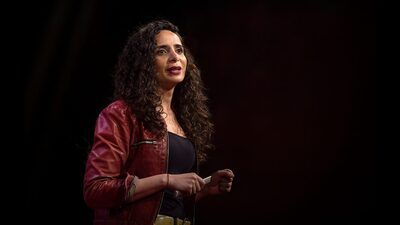
#3 - Ella Al-Shamahi: The fascinating (and dangerous) places scientists aren't exploring
Season 2019 - Episode 161 - Aired 7/15/2019
We're not doing frontline exploratory science in a huge portion of the world — the places governments deem too hostile or disputed. What might we be missing because we're not looking? In this fearless, unexpectedly funny talk, paleoanthropologist Ella Al-Shamahi takes us on an expedition to the Yemeni island of Socotra — one of the most biodiverse places on earth — and makes the case for scientists to explore the unstable regions that could be home to incredible discoveries.
Watch Now:Amazon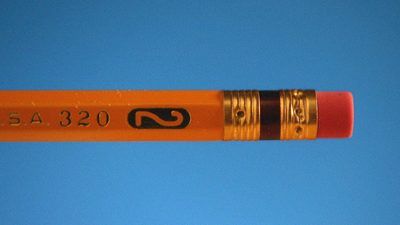
#4 - Caroline Weaver: Why the pencil is perfect
Season 2018 - Episode 78 - Aired 3/15/2018
Why are pencils shaped like hexagons, and how did they get their iconic yellow color? Pencil shop owner Caroline Weaver takes us inside the fascinating history of the pencil.
Watch Now:Amazon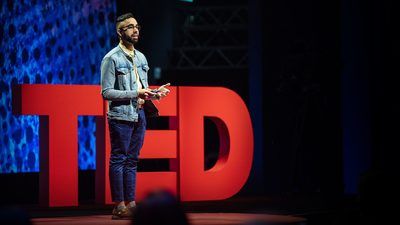
#5 - Amit Kalra: 3 creative ways to fix fashion's waste problem
Season 2018 - Episode 49 - Aired 2/15/2018
What happens to the clothes we don't buy? You might think that last season's coats, trousers and turtlenecks end up being put to use, but most of it (nearly 13 million tons each year in the United States alone) ends up in landfills. Fashion has a waste problem, and Amit Kalra wants to fix it. He shares some creative ways the industry can evolve to be more conscientious about the environment — and gain a competitive advantage at the same time.
Watch Now:Amazon#6 - Barry Schwartz: Using Our Practical Wisdom
Season 2010 - Episode 46 - Aired 11/1/2010
Watch Now:Amazon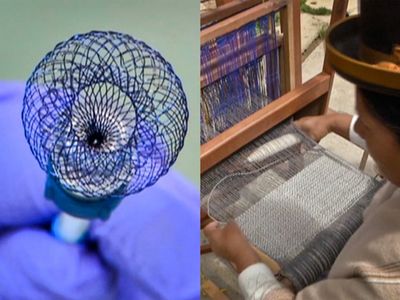
#8 - Franz Freudenthal: A new way to heal hearts without surgery
Season 2016 - Episode 169 - Aired 9/9/2016
At the intersection of medical invention and indigenous culture, pediatric cardiologist Franz Freudenthal mends holes in the hearts of children across the world, using a device born from traditional Bolivian loom weaving. "The most complex problems in our time," he says, "can be solved with simple techniques, if we are able to dream."
Watch Now:Amazon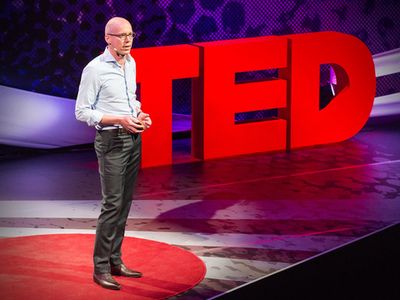
#9 - Olivier Scalabre: The next manufacturing revolution is here
Season 2016 - Episode 156 - Aired 8/22/2016
Economic growth has been slowing for the past 50 years, but relief might come from an unexpected place — a new form of manufacturing that is neither what you thought it was nor where you thought it was. Industrial systems thinker Olivier Scalabre details how a fourth manufacturing revolution will produce a macroeconomic shift and boost employment, productivity and growth.
Watch Now:Amazon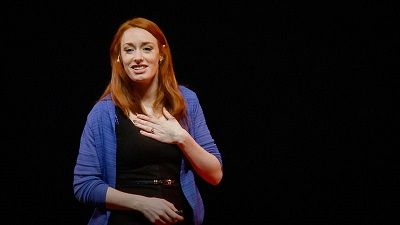
#10 - Hannah Fry: The mathematics of love
Season 2015 - Episode 26 - Aired 2/13/2015
Finding the right mate is no cakewalk — but is it even mathematically likely? In a charming talk, mathematician Hannah Fry shows patterns in how we look for love, and gives her top three tips (verified by math!) for finding that special someone.
Watch Now:Amazon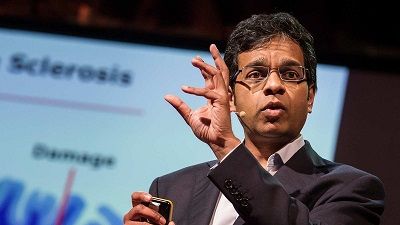
#11 - Siddharthan Chandran: Can the damaged brain repair itself?
Season 2014 - Episode 36 - Aired 2/24/2014
After a traumatic brain injury, it sometimes happens that the brain can repair itself, building new brain cells to replace damaged ones. But the repair doesn't happen quickly enough to allow recovery from degenerative conditions like motor neuron disease (also known as Lou Gehrig's disease or ALS). Siddharthan Chandran walks through some new techniques using special stem cells that could allow the damaged brain to rebuild faster.
Watch Now:Amazon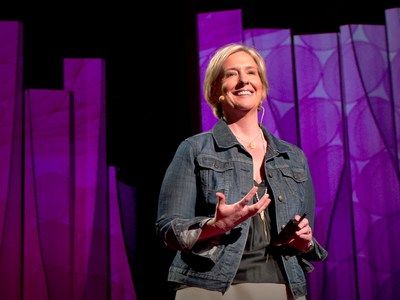
#12 - Brené Brown: Listening to shame
Season 2012 - Episode 12 - Aired 3/16/2012
Shame is an unspoken epidemic, the secret behind many forms of broken behavior. Brené Brown, whose earlier talk on vulnerability became a viral hit, explores what can happen when people confront their shame head-on. Her own humor, humanity and vulnerability shine through every word.
Watch Now:Amazon#13 - Allan Savory: How to green the desert and reverse climate change
Season 2013 - Episode 43 - Aired 3/5/2013
Watch Now:Amazon
#14 - Christopher Bell: Bring on the female superheroes!
Season 2016 - Episode 162 - Aired 8/30/2016
Why is it so hard to find female superhero merchandise? In this passionate, sparkling talk, media studies scholar (and father of a Star Wars-obsessed daughter) Christopher Bell addresses the alarming lack of female superheroes in the toys and products marketed to kids — and what it means for how we teach them about the world.
Watch Now:Amazon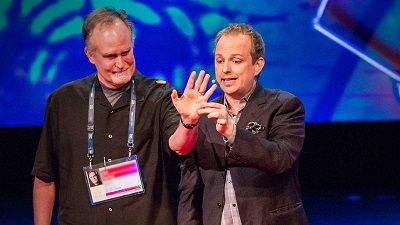
#15 - Apollo Robbins: The art of misdirection
Season 2013 - Episode 173 - Aired 9/13/2013
Hailed as the greatest pickpocket in the world, Apollo Robbins studies the quirks of human behavior as he steals your watch. In a hilarious demonstration, Robbins samples the buffet of the TEDGlobal 2013 audience, showing how the flaws in our perception make it possible to swipe a wallet and leave it on its owner’s shoulder while they remain clueless.
Watch Now:Amazon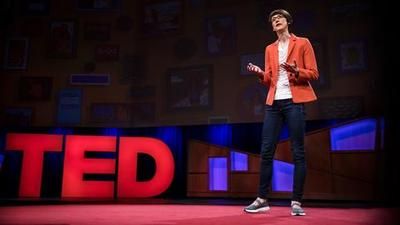
#16 - Helen Pearson: Lessons from the longest study on human development
Season 2017 - Episode 205 - Aired 10/2/2017
For the past 70 years, scientists in Britain have been studying thousands of children through their lives to find out why some end up happy and healthy while others struggle. It's the longest-running study of human development in the world, and it's produced some of the best-studied people on the planet while changing the way we live, learn and parent. Reviewing this remarkable research, science journalist Helen Pearson shares some important findings and simple truths about life and good parenting.
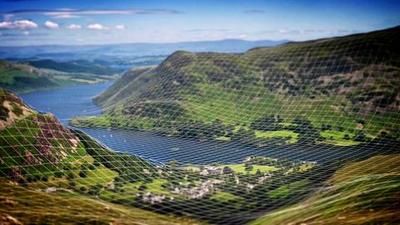
#17 - Chris Sheldrick: A precise, three-word address for every place on earth
Season 2017 - Episode 223 - Aired 10/19/2017
With what3words, Chris Sheldrick and his team have divided the entire planet into three-meter squares and assigned each a unique, three-word identifier, like famous.splice.writers or blocks.evenly.breed, giving a precise address to the billions of people worldwide who don't have one. In this quick talk about a big idea, Sheldrick explains the economic and political implications of giving everyone an accurate address -- from building infrastructure to sending aid to disaster zones to delivering hot pizza.
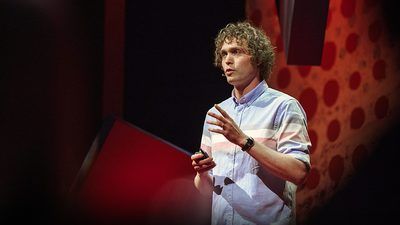
#18 - Alastair Gray: How fake handbags fund terrorism and organized crime
Season 2017 - Episode 270 - Aired 12/6/2017
What's the harm in buying a knock-off purse or a fake designer watch? According to counterfeit investigator Alastair Gray, fakes like these fund terrorism and organized crime. Learn more about the trillion-dollar underground economy of counterfeiting -- from the criminal organizations that run it to the child labor they use to produce its goods -- as well as measures you can take to help stop it. "Let's shine a light on the dark forces of counterfeiting that are hiding in plain sight," Gray says.
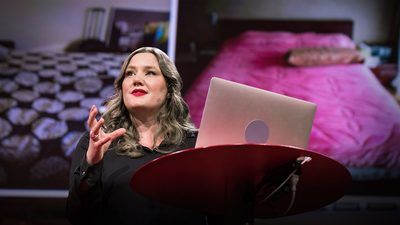
#19 - Anna Rosling Rönnlund: See how the rest of the world lives, organized by income
Season 2018 - Episode 19 - Aired 1/18/2018
What does it look like when someone in Sweden brushes their teeth or when someone in Rwanda makes their bed? Anna Rosling Rönnlund wants all of us to find out, so she sent photographers to 264 homes in 50 countries (and counting!) to document the stoves, bed, toilets, toys and more in households from every income bracket around the world. See how families live in Latvia or Burkina Faso or Peru as Rosling Rönnlund explains the power of data visualization to help us better understand the world.
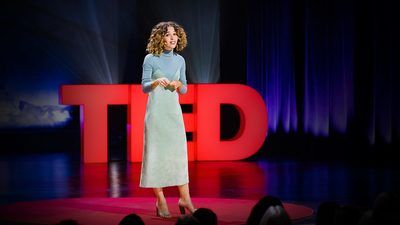
#20 - Cleo Wade: Want to change the world? Start by being brave enough to care
Season 2018 - Episode 20 - Aired 1/19/2018
Artist and poet Cleo Wade recites a moving poem about being an advocate for love and acceptance in a time when both seem in short supply. Woven between stories of people at the beginning and end of their lives, she shares some truths about growing up (and speaking up) and reflects on the wisdom of a life well-lived, leaving us with a simple yet enduring takeaway: be good to yourself, be good to others, be good to the earth. "The world will say to you, 'Be a better person,'" Wade says. "Do not be afraid to say, 'Yes.'"
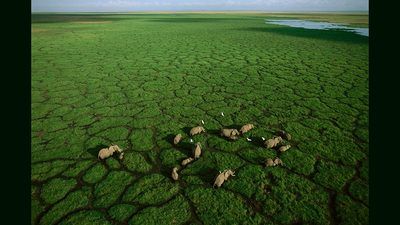
#21 - George Steinmetz: Photos of Africa, taken from a flying lawn chair
Season 2018 - Episode 25 - Aired 1/24/2018
George Steinmetz's spectacular photos show Africa from the air, taken from the world's slowest, lightest aircraft. Join Steinmetz to discover the surprising historical, ecological and sociopolitical patterns that emerge when you go low and slow in a flying lawn chair.
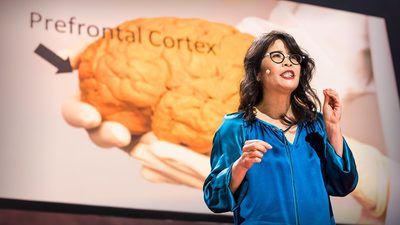
#22 - Wendy Suzuki: The brain-changing benefits of exercise
Season 2018 - Episode 61 - Aired 2/28/2018
What's the most transformative thing that you can do for your brain today? Exercise! says neuroscientist Wendy Suzuki. Get inspired to go to the gym as Suzuki discusses the science of how working out boosts your mood and memory — and protects your brain against neurodegenerative diseases like Alzheimer's.
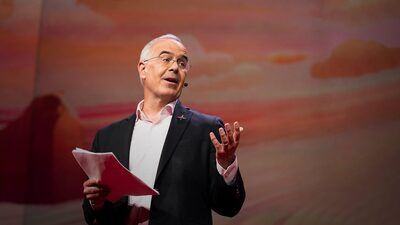
#23 - David Brooks: The lies our culture tells us about what matters -- and a better way to live
Season 2019 - Episode 132 - Aired 6/5/2019
Our society is in the midst of a social crisis, says op-ed columnist and author David Brooks: we're trapped in a valley of isolation and fragmentation. How do we find our way out? Based on his travels across the United States — and his meetings with a range of exceptional people known as "weavers" — Brooks lays out his vision for a cultural revolution that empowers us all to lead lives of greater meaning, purpose and joy.
#24 - Jochen Wegner: What happened when we paired up thousands of strangers to talk politics
Season 2019 - Episode 186 - Aired 9/3/2019
In spring 2019, more than 17,000 Europeans from 33 countries signed up to have a political argument with a complete stranger. They were part of "Europe Talks," a project that organizes one-on-one conversations between people who disagree — sort of like a Tinder for politics. Editor Jochen Wegner shares the unexpected things that happened when people met up to talk — and shows how face-to-face discussions could get a divided world to rethink itself.
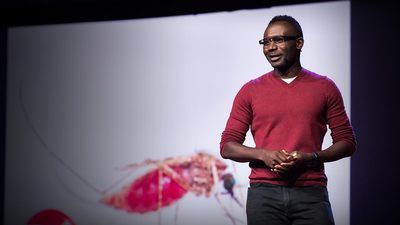
#25 - Fredros Okumu: Why I study the most dangerous animal on earth -- mosquitoes
Season 2018 - Episode 29 - Aired 1/29/2018
What do we really know about mosquitoes? Fredros Okumu catches and studies these disease-carrying insects for a living -- with the hope of crashing their populations. Join Okumu for a tour of the frontlines of mosquito research, as he details some of the unconventional methods his team at the Ifakara Health Institute in Tanzania have developed to target what has been described as the most dangerous animal on earth.