The BEST episodes of TED Talks season 2017
Every episode of TED Talks season 2017, ranked from best to worst by thousands of votes from fans of the show. The best episodes of TED Talks season 2017!
TED is a nonprofit devoted to Ideas Worth Spreading. It started out (in 1984) as a conference bringing together people from three worlds: Technology, Entertainment, Design. TEDTalks began as a simple attempt to share what happens at TED with the world. Under the moniker "ideas worth spreading," talks were released online. They rapidly attracted a global audience in the millions. Indeed, the reaction was so enthusiastic that the entire TED website has been reengineered around TEDTalks, with the goal of giving everyone on-demand access to the world's most inspiring voices. [TED-Ed and TEDx are separate TVDB series and should NOT be listed here. Episode ordering and dates are sourced from YouTube.]
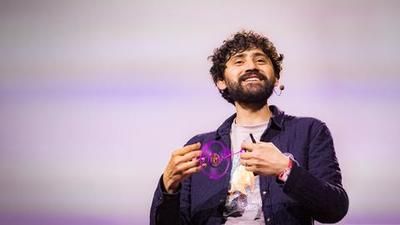

#1 - Manu Prakash: Lifesaving scientific tools made of paper
Season 2017 - Episode 131 - Aired 7/10/2017
Inventor Manu Prakash turns everyday materials into powerful scientific devices, from paper microscopes to a clever new mosquito tracker. From the TED Fellows stage, he demos Paperfuge, a hand-powered centrifuge inspired by a spinning toy that costs 20 cents to make and can do the work of a $1,000 machine, no electricity required.
Watch Now:Amazon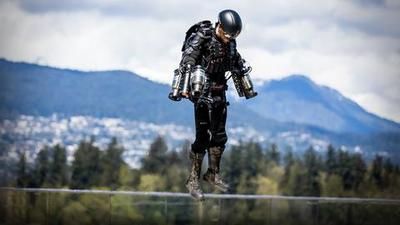
#2 - Richard Browning: How I built a jet suit
Season 2017 - Episode 121 - Aired 6/13/2017
We've all dreamed of flying -- but for Richard Browning, flight is an obsession. He's built an Iron Man-like suit that leans on an elegant collaboration of mind, body and technology, bringing science fiction dreams a little closer to reality. Learn more about the trial and error process behind his invention and take flight with Browning in an unforgettable demo.
Watch Now:Amazon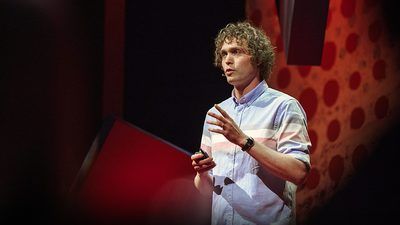
#3 - Alastair Gray: How fake handbags fund terrorism and organized crime
Season 2017 - Episode 270 - Aired 12/6/2017
What's the harm in buying a knock-off purse or a fake designer watch? According to counterfeit investigator Alastair Gray, fakes like these fund terrorism and organized crime. Learn more about the trillion-dollar underground economy of counterfeiting -- from the criminal organizations that run it to the child labor they use to produce its goods -- as well as measures you can take to help stop it. "Let's shine a light on the dark forces of counterfeiting that are hiding in plain sight," Gray says.
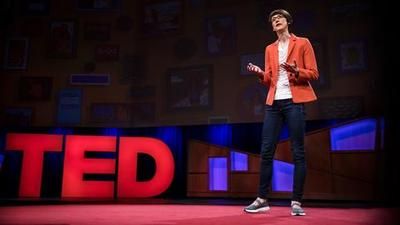
#4 - Helen Pearson: Lessons from the longest study on human development
Season 2017 - Episode 205 - Aired 10/2/2017
For the past 70 years, scientists in Britain have been studying thousands of children through their lives to find out why some end up happy and healthy while others struggle. It's the longest-running study of human development in the world, and it's produced some of the best-studied people on the planet while changing the way we live, learn and parent. Reviewing this remarkable research, science journalist Helen Pearson shares some important findings and simple truths about life and good parenting.
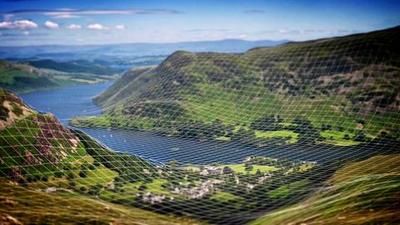
#5 - Chris Sheldrick: A precise, three-word address for every place on earth
Season 2017 - Episode 223 - Aired 10/19/2017
With what3words, Chris Sheldrick and his team have divided the entire planet into three-meter squares and assigned each a unique, three-word identifier, like famous.splice.writers or blocks.evenly.breed, giving a precise address to the billions of people worldwide who don't have one. In this quick talk about a big idea, Sheldrick explains the economic and political implications of giving everyone an accurate address -- from building infrastructure to sending aid to disaster zones to delivering hot pizza.
#6 - Helen Czerski: The fascinating physics of everyday life
Season 2017 - Episode 189 - Aired 9/14/2017
Physics doesn't just happen in a fancy lab -- it happens when you push a piece of buttered toast off the table or drop a couple of raisins in a fizzy drink or watch a coffee spill dry. Become a more interesting dinner guest as physicist Helen Czerski presents various concepts in physics you can become familiar with using everyday things found in your kitchen.
#7 - Joel Jackson: A vehicle built in Africa, for Africa
Season 2017 - Episode 284 - Aired 12/19/2017
Joel Jackson wants to reimagine transportation around the needs of the African consumer. He's designed an SUV that's rugged enough for long stretches of uneven terrain and affordable enough to be within reach of those who need it most. Learn more about the challenges of mobility and manufacturing in Africa -- and what a localized motor industry could mean for the future of the continent.

#8 - Javed Akhtar: The gift of words
Season 2017 - Episode 282 - Aired 12/18/2017
"Do you know what I mean?" Legendary poet, lyricist and screenwriter Javed Akhtar asks why we seem to be losing our power to use words -- and inspires us to better understand and communicate with one another using this near-magical tool that carries our culture across generations. (In Hindi with English subtitles)
#9 - Euna Lee: What I learned as a prisoner in North Korea
Season 2017 - Episode 204 - Aired 9/29/2017
In March 2009, North Korean soldiers captured journalist Euna Lee and her colleague Laura Ling while they were shooting a documentary on the border with China. The courts sentenced them to 12 years of hard labor, but American diplomats eventually negotiated their release. In this surprising, deeply human talk, Lee shares her experience living as the enemy in a detention center for 140 days -- and the tiny gestures of humanity from her guards that sustained her.
#10 - Julio Gil: Future tech will give you the benefits of city life anywhere
Season 2017 - Episode 201 - Aired 9/27/2017
Don't believe predictions that say the future is trending towards city living. Urbanization is actually reaching the end of its cycle, says logistics expert Julio Gil, and soon more people will be choosing to live (and work) in the countryside, thanks to rapid advances in augmented reality, autonomous delivery, off-the-grid energy and other technologies. Think outside city walls and consider the advantages of country living with this forward-thinking talk.
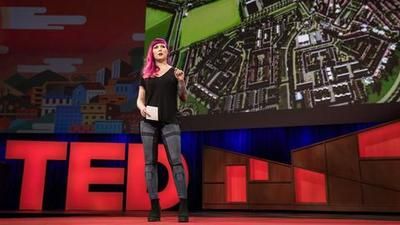
#11 - Karoliina Korppoo: How a video game might help us build better cities
Season 2017 - Episode 197 - Aired 9/22/2017
With more than half of the world population living in cities, one thing is undeniable: we are an urban species. Part game, part urban planning sketching tool, "Cities: Skylines" encourages people to use their creativity and self-expression to rethink the cities of tomorrow. Designer Karoliina Korppoo takes us on a tour through some extraordinary places users have created, from futuristic fantasy cities to remarkably realistic landscapes. What does your dream city look like?
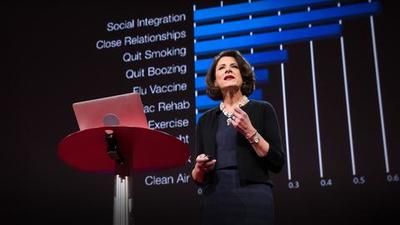
#12 - Susan Pinker: The secret to living longer may be your social life
Season 2017 - Episode 163 - Aired 8/18/2017
The Italian island of Sardinia has more than six times as many centenarians as the mainland and ten times as many as North America. Why? According to psychologist Susan Pinker, it's not a sunny disposition or a low-fat, gluten-free diet that keeps the islanders healthy -- it's their emphasis on close personal relationships and face-to-face interactions. Learn more about super longevity as Pinker explains what it takes to live to 100 and beyond.
#13 - Manoush Zomorodi: How boredom can lead to your most brilliant ideas
Season 2017 - Episode 158 - Aired 8/15/2017
Do you sometimes have your most creative ideas while folding laundry, washing dishes or doing nothing in particular? It's because when your body goes on autopilot, your brain gets busy forming new neural connections that connect ideas and solve problems. Learn to love being bored as Manoush Zomorodi explains the connection between spacing out and creativity.
#14 - Jennifer Pluznick: You smell with your body, not just your nose
Season 2017 - Episode 144 - Aired 7/27/2017
Do your kidneys have a sense of smell? Turns out, the same tiny scent detectors found in your nose are also found in some pretty unexpected places -- like your muscles, kidneys and even your lungs. In this quick talk (filled with weird facts), physiologist Jennifer Pluznick explains why they're there and what they do.
#15 - Tristan Harris: The manipulative tricks tech companies use to capture your attention
Season 2017 - Episode 143 - Aired 7/26/2017
A handful of people working at a handful of tech companies steer the thoughts of billions of people every day, says design thinker Tristan Harris. From Facebook notifications to Snapstreaks to YouTube autoplays, they're all competing for one thing: your attention. Harris shares how these companies prey on our psychology for their own profit and calls for a design renaissance in which our tech instead encourages us to live out the timeline we want.
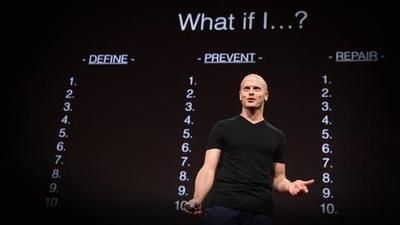
#16 - Tim Ferriss: Why you should define your fears instead of your goals
Season 2017 - Episode 120 - Aired 6/12/2017
The hard choices -- what we most fear doing, asking, saying -- are very often exactly what we need to do. How can we overcome self-paralysis and take action? Tim Ferriss encourages us to fully envision and write down our fears in detail, in a simple but powerful exercise he calls "fear-setting." Learn more about how this practice can help you thrive in high-stress environments and separate what you can control from what you cannot.
#17 - Todd Scott: An intergalactic guide to using a defibrillator
Season 2017 - Episode 76 - Aired 4/12/2017
If Yoda goes into cardiac arrest, will you know what to do? Artist and first-aid enthusiast Todd Scott breaks down what you need to know about using an automated external defibrillator, or AED -- in this galaxy and ones that are far, far away. Prepare to save the life of a Jedi, Chewbacca (he'll need a quick shave first) or someone else in need with some helpful pointers.
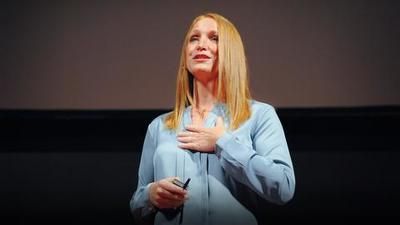
#18 - Casey Brown: Know your worth, and then ask for it
Season 2017 - Episode 68 - Aired 4/3/2017
Your boss probably isn't paying you what you're worth -- instead, they're paying you what they think you're worth. Take the time to learn how to shape their thinking. Pricing consultant Casey Brown shares helpful stories and learnings that can help you better communicate your value and get paid for your excellence.
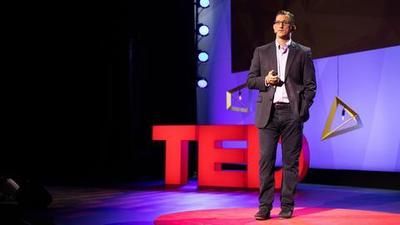
#19 - Augie Picado: The real reason manufacturing jobs are disappearing
Season 2017 - Episode 188 - Aired 9/14/2017
We've heard a lot of rhetoric lately suggesting that countries like the US are losing valuable manufacturing jobs to lower-cost markets like China, Mexico and Vietnam -- and that protectionism is the best way forward. But those jobs haven't disappeared for the reasons you may think, says border and logistics specialist Augie Picado. He gives us a reality check about what global trade really looks like and how shared production and open borders help us make higher quality products at lower costs.
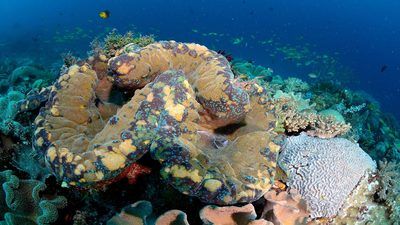
#20 - Mei Lin Neo: The fascinating secret lives of giant clams
Season 2017 - Episode 199 - Aired 9/25/2017
When you think about the deep blue sea, you might instantly think of whales or coral reefs. But spare a thought for giant clams, the world's largest living shellfish. These incredible creatures can live to 100, grow up to four and a half feet long and weigh as much as three baby elephants. In this charming talk, marine biologist Mei Lin Neo shares why she's obsessively trying to turn these legendary sea creatures into heroes of the oceans.
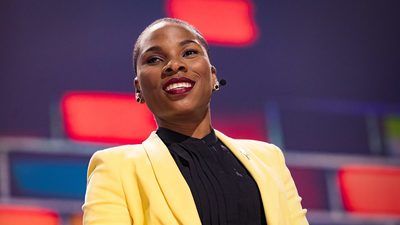
#21 - Luvvie Ajayi: Get comfortable with being uncomfortable
Season 2017 - Episode 266 - Aired 12/1/2017
Luvvie Ajayi isn't afraid to speak her mind or to be the one dissenting voice in a crowd, and neither should you. "Your silence serves no one," says the writer, activist and self-proclaimed professional troublemaker. In this bright, uplifting talk, Ajayi shares three questions to ask yourself if you're teetering on the edge of speaking up or quieting down -- and encourages all of us to get a little more comfortable with being uncomfortable.
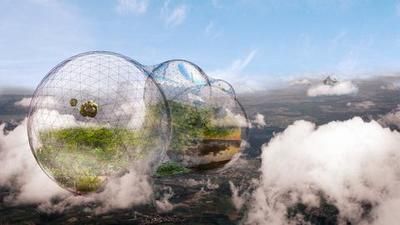
#22 - Tomás Saraceno: Would you live in a floating city in the sky?
Season 2017 - Episode 181 - Aired 9/7/2017
In a mind-bending talk that blurs the line between science and art, Tomás Saraceno exhibits a series of air-inspired sculptures and installations designed to usher in a new era of sustainability, the "Aerocene." From giant, cloud-like playgrounds suspended 22 meters in the air to a balloon sculpture that travels the world without burning a single drop of fossil fuel, Saraceno's work invites us to explore the bounds of our fragile human and terrestrial ecosystems. (In Spanish with English subtitles.)
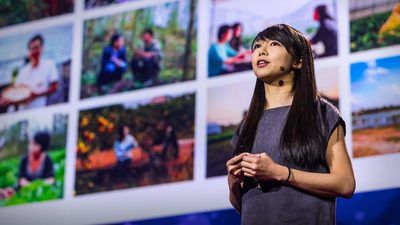
#23 - Matilda Ho: The future of good food in China
Season 2017 - Episode 262 - Aired 11/28/2017
Fresh food free of chemicals and pesticides is hard to come by in China: in 2016, the Chinese government revealed half a million food safety violations in just nine months. In the absence of safe, sustainable food sources, TED Fellow Matilda Ho launched China's first online farmers market, instituting a zero-tolerance test towards pesticides, antibiotics and hormones in food. She shares how she's growing her platform from the ground up and bringing local, organically grown food to the families that need it.
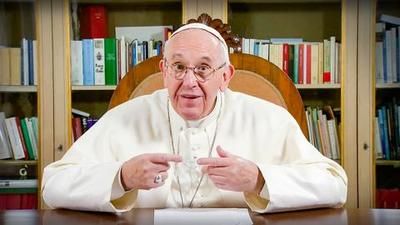
#24 - His Holiness Pope Francis: Why the only future worth building includes everyone
Season 2017 - Episode 86 - Aired 4/26/2017
A single individual is enough for hope to exist, and that individual can be you, says His Holiness Pope Francis in this searing TED Talk delivered directly from Vatican City. In a hopeful message to people of all faiths, to those who have power as well as those who don't, the spiritual leader provides illuminating commentary on the world as we currently find it and calls for equality, solidarity and tenderness to prevail. "Let us help each other, all together, to remember that the 'other' is not a statistic, or a number," he says. "We all need each other."

#25 - Sō Percussion: Music for Wood and Strings
Season 2017 - Episode 66 - Aired 3/31/2017
Sō Percussion creates adventurous compositions with new, unconventional instruments. Performing "Music for Wood and Strings" by Bryce Dessner of The National, the quartet plays custom-made dulcimer-like instruments that combine the sound of an electric guitar with the percussionist's toolkit to create a hypnotic effect.