The BEST episodes of The Germans season 2
Every episode of The Germans season 2, ranked from best to worst by thousands of votes from fans of the show. The best episodes of The Germans season 2!
Each episode recounts a selected epoch of German history. Historical events are recreated through a combination of live action scenes and computer generated animations. The series was filmed at over 200 different locations in Germany, Malta, and Romania at a cost of approximately €500,000 per episode.
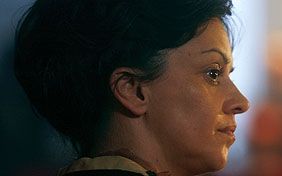

#1 - Rosa Luxemburg and Freedom
Season 2 - Episode 9 - Aired 12/12/2010
From her youth onward, Rosa Luxemburg was convinced that the world needed to change. She wanted to realize her dream of a socialist revolution, first within the SPD and later in the Communist Party of Germany, which she helped found. But the revolution failed. On November 9, 1918, a revolution did indeed break out in Germany—but it ultimately ended with the adoption of the new Weimar Constitution.
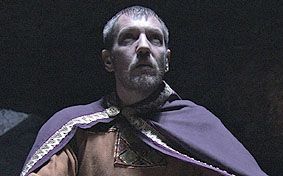
#2 - Charlemagne and the Saxons
Season 2 - Episode 1 - Aired 11/14/2010
Even among his contemporaries, he was regarded as the “Father of Europe”: Charlemagne (presumably 748–814). He laid the foundation that shaped the continent. Germans and French alike regard the legendary Carolingian as their common forefather.
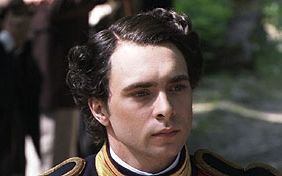
#3 - Ludwig II and the Bavarians
Season 2 - Episode 8 - Aired 12/7/2010
Myths and legends surround the figure of Ludwig II of Bavaria (1845–1886), known as the “Fairy-Tale King.” He is said to have shunned politics and devoted himself above all to his fanciful passions: the operas of Richard Wagner and the construction of magnificent castles such as Neuschwanstein, Linderhof, and Herrenchiemsee. But Ludwig was by no means just a fanciful dreamer; rather, he pursued clear political goals: he believed in the “Third Germany,” an independent power alongside Prussia and Austria. In the mid-19th century, this federal confederation of small and medium-sized German states served as an alternative model to a federal state under Prussian leadership. The vision ultimately failed due to the political genius of Otto von Bismarck and the military strength of the Hohenzollern state.
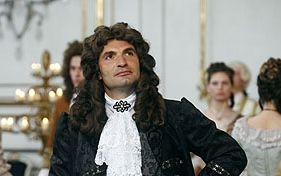
#4 - Augustus the Strong and Love
Season 2 - Episode 6 - Aired 11/30/2010
He is considered one of the most dazzling monarchs of modern times: Elector Frederick Augustus I of Saxony, known as “August the Strong” (1670–1733). His regal self-presentation was comparable only to that of one other European monarch: Louis XIV. August’s court was meant to be in no way inferior to that of the French Sun King. The king organized hundreds of celebrations each year, including balls, masquerades, and animal hunts.
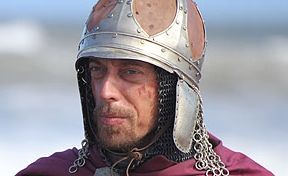
#5 - Frederick II and the Crusade
Season 2 - Episode 2 - Aired 11/16/2010
Some of his contemporaries called Frederick II of the House of Staufen (1194–1250) “the Wonder of the World”; his empire stretched from Sicily to the North Sea coast. In addition to German, he spoke Italian, French, Greek, and Arabic; he wrote poetry, philosophized, and authored a book on falconry. He held the German kingship even as a toddler; his mother, Constance of Sicily, had him crowned monarch there. On German soil, a bitter struggle for the throne raged once again between the Staufers and the Guelphs. Once again, the princely camp was divided, and the pope intervened.
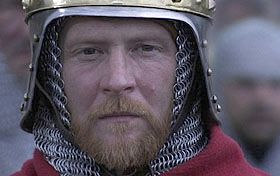
#6 - Charles IV and the Black Death
Season 2 - Episode 4 - Aired 11/23/2010
The reign of Charles IV (1316–1378) ranks among the most dramatic periods in German history. Around the middle of the 14th century, the Black Death claimed the lives of one-third of the German population. The king who ruled during this time of terror was a member of the House of Luxembourg. Charles IV was born in Prague in 1316. His father, John, had married a Bohemian princess and had thereby become one of the most powerful men in the empire. In 1346, the ambitious Luxembourger succeeded in having his son Charles elected as an rival king to the reigning Louis of Bavaria by paying exorbitant bribes. Charles’s position in the empire was initially weak, but the situation changed with the sudden death of Louis, just a few months after the election.
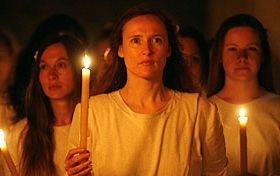
#7 - Hildegard of Bingen and the Power of Women
Season 2 - Episode 3 - Aired 11/21/2010
Hildegard of Bingen (1098–1179) is the most popular German figure of the Middle Ages—on par with the powerful figures of her time. She was a visionary, natural scientist, politician, composer, theologian, and even the administrator of two convents she founded. Many of her writings, especially her knowledge of natural medicine, remain as relevant today as ever. Others still raise questions. While some suspect that Hildegard’s visions were a kind of herbalist’s drug-induced trance, others see in them a prophetic gift, even proof of her holiness.
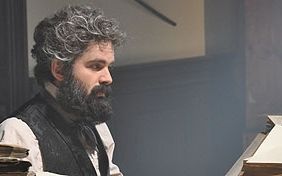
#8 - Karl Marx and the Class Struggle
Season 2 - Episode 7 - Aired 12/5/2010
He is one of the most influential bestselling authors in world history, and yet very few have read his work in its entirety. His teachings became a substitute religion, even though he never saw himself as a founder of a faith, but rather as a scientific analyst. “I am no Marxist,” Karl Marx (1818–1883) quipped, a man whose work influenced the course of world history like no other German since Luther. From the mid-20th century onward, roughly half of humanity was governed by regimes that drew upon the German thinker’s ideas.
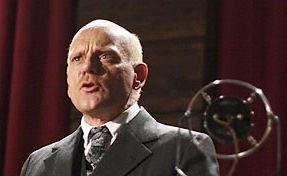
#9 - Gustav Stresemann and the Republic
Season 2 - Episode 10 - Aired 12/14/2010
Gustav Stresemann (1878–1929) became Chancellor of the Reich just as the young Weimar Republic was once again plunged into chaos: in the crisis year of 1923. Germany was still suffering from the aftermath of the lost war and the Treaty of Versailles. France and Belgium occupied the Ruhr region to enforce reparations amounting to billions and to gain control over this vital industrial region. Inflation reached its peak. Communist uprisings threatened from the left, while the radical right called for a national dictatorship. Becoming chancellor in such times was “actually political suicide,” Stresemann wrote to his wife.
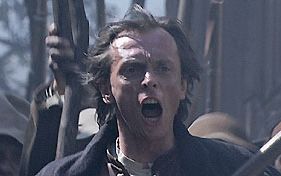
#10 - Thomas Müntzer and the Peasants' War
Season 2 - Episode 5 - Aired 11/28/2010
It was a time of upheaval; the Reformation was shaking the established order. In 1521, turmoil reigned in Zwickau, Saxony: The young priest Thomas Müntzer (1489–1525), who preached at St. Mary’s Church, turned against both ecclesiastical and secular authorities and demanded the God-given right to freedom and equality for all people. Müntzer was not a man of compromise. Luther’s criticism of the church—which he had once admired—did not go far enough for him. Not only the papacy, but also the class-based secular order was a thorn in his side.